

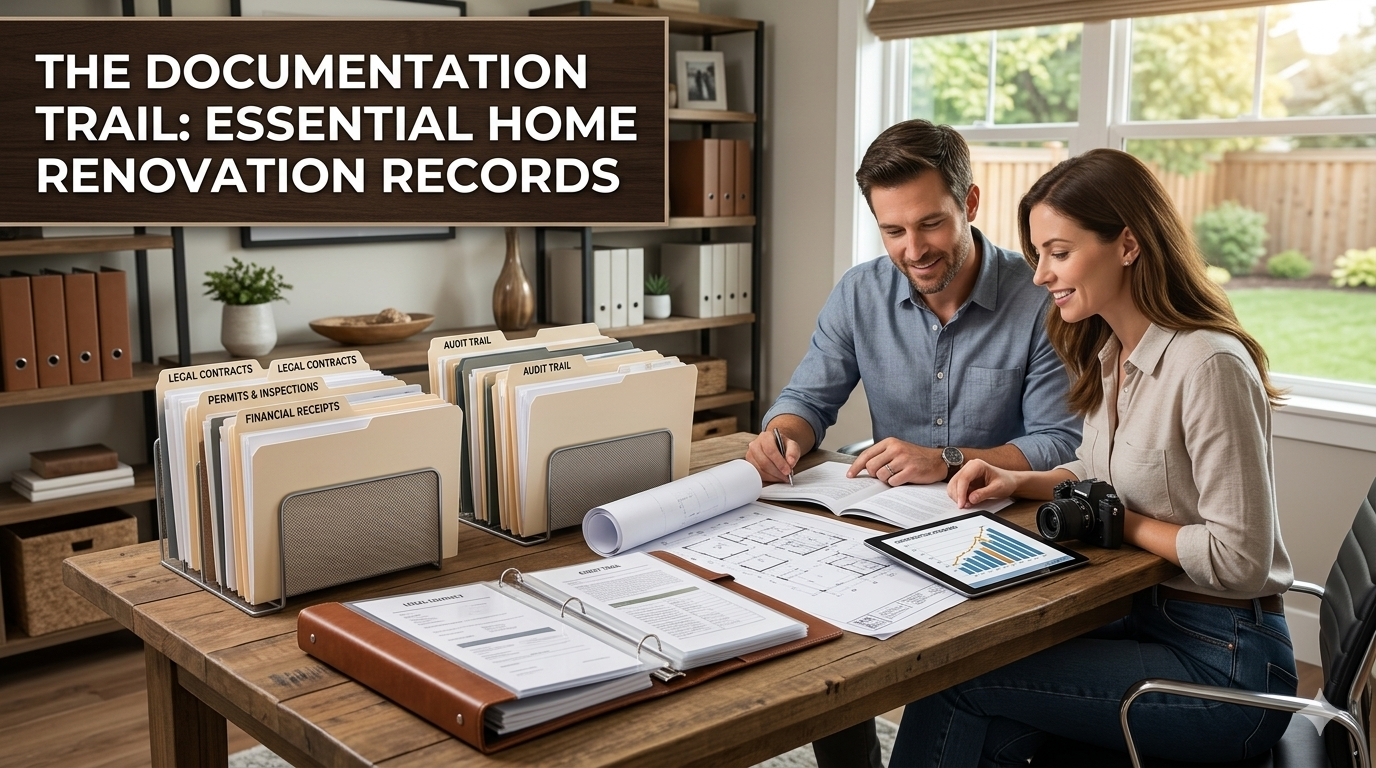
When the final hammer drops, many owners stop tracking their project. However, this is a critical mistake. To protect your property’s future value and avoid legal disputes, you must create a permanent audit trail. Therefore, maintaining organized home renovation records is the most effective way to safeguard your investment.
Understanding Home Renovation Records
Why do you need a paper trail? In fact, title insurance companies and future buyers require proof that all work was permitted and professional. Before starting your project, verify your contractor’s license status through the Washington State Department of Labor & Industries to ensure they are registered and bonded. Without these documents, a simple renovation could become a legal liability during a property transfer.
Legal and Financial Home Renovation Records
To build a robust archive, you must categorize your files. Consequently, treat your project as a corporate audit rather than a casual home improvement.
- Securing Legal Home Renovation RecordsYour legal file must contain the “life cycle” of your permit. This includes the initial application, approved plans, and the final certificate of occupancy. Indeed, if a permit isn’t closed, it remains a lien risk.
- Organizing Financial Home Renovation RecordsKeep every receipt, change order, and proof of final payment. Moreover, when you eventually sell, these documents provide the evidence needed to adjust your cost basis for tax purposes.
Managing Your Digital Archive
Indeed, paper is fragile. Therefore, scan your physical documents into a cloud-based storage system. Categorize them by project phase to ensure that, if a dispute arises, your home renovation records are accessible instantly.
Protecting Your Asset Through Standardization
The project doesn’t end when the contractor leaves. Furthermore, by creating a standardized library of your improvements, you ensure that every dollar spent is verifiable.
Mastering Your Project Compliance
In summary, by following this archiving methodology, you transition from a casual owner to a strategic custodian of your property. Start organizing your files today and ensure your home’s value is legally protected for years to come.
Disclaimer: This article provides information only. Consult with a qualified accountant or attorney regarding your specific tax and legal obligations.